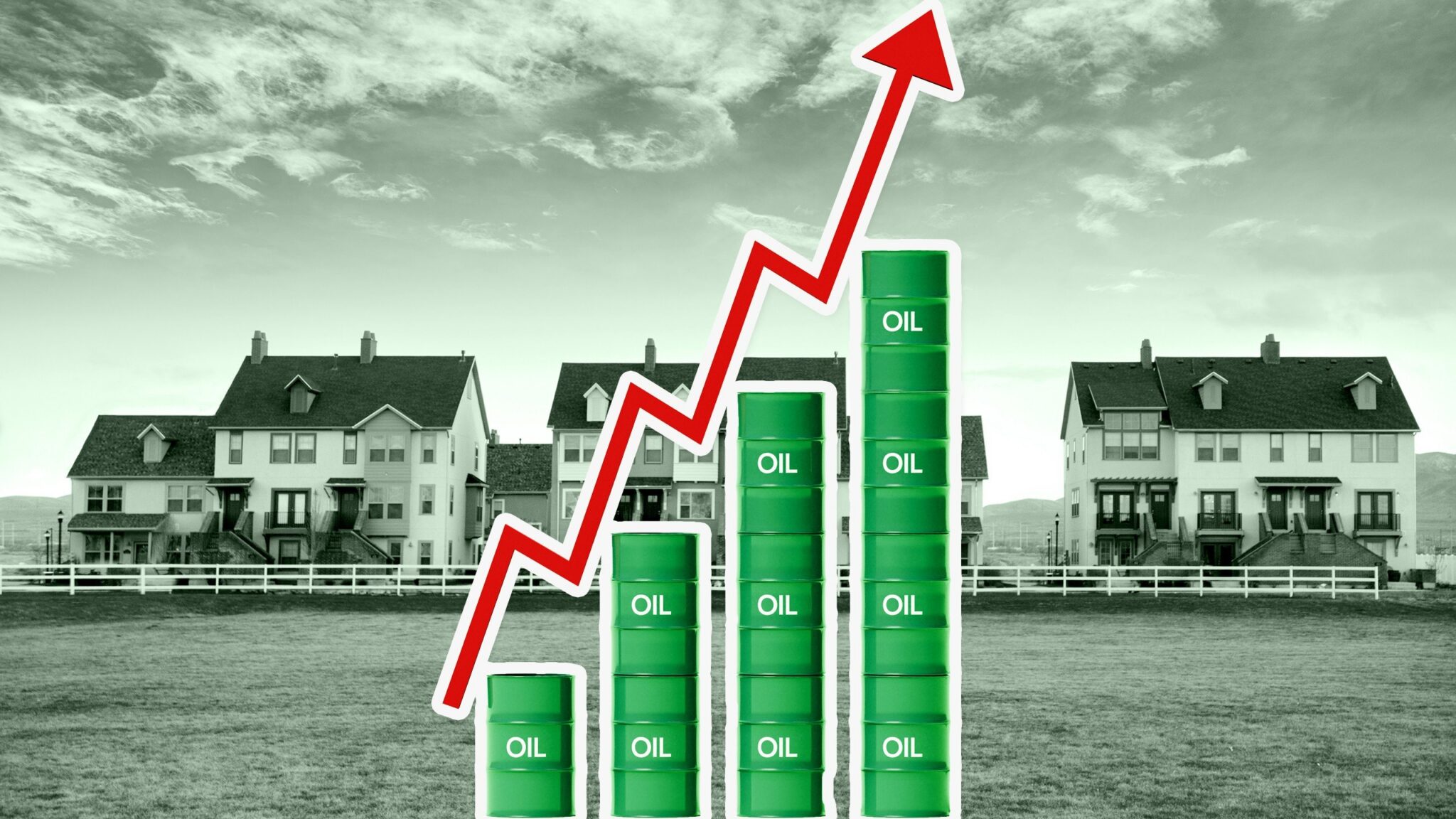
Industries are closely linked, with the oil sector especially vital to the economy. When geopolitical tensions rise, oil market shocks quickly affect daily life.
One major factor now influencing the U.S. housing market is the ongoing conflict between Iran and the United States. As tensions escalate and oil prices surge, the market is already seeing higher mortgage rates, construction costs, and inflation concerns.
Understanding these links helps real estate professionals anticipate shifts and navigate a market shaped by forces beyond local factors.
Oil Prices Spike During Conflict: The Housing Market Reacts
The conflict has pushed global oil prices sharply higher. Brent crude, a type of crude oil that serves as the primary benchmark for global oil trade, has remained above $100 per barrel, up from around $70 before the conflict began. This surge is tied to Iran’s threats to restrict tanker traffic through the Strait of Hormuz, a chokepoint responsible for roughly 20% of the world’s crude oil supply.
When oil prices rise, the effects spread quickly:
- Higher gasoline and diesel costs
- Increased shipping and logistics expenses
- Rising utility and energy costs
- Upward pressure on inflation across the economy
These increases reach beyond consumers at the pump and affect construction budgets, mortgage rates, and more.
Why Oil Prices Push Mortgage Rates Higher
Elevated oil prices stoke inflation fears. When markets anticipate higher inflation, investors require greater yields on long‑term bonds, including the 10‑year Treasury note, which mortgage rates closely track.
As a result, recent reports indicate:
- Mortgage rates have climbed back above 6%, reversing recent declines.
- Bond yields are rising as investors seek safer assets.
- Some experts even suspect the Federal Reserve may delay rate cuts if inflation accelerates.
Even small rate increases can meaningfully impact affordability. A shift from 5.9% to 6.1% may not sound dramatic, but it can price buyers out of certain homes and reduce purchasing power across the board.
Construction Costs Rise When Energy Prices Surge
Oil powers far more than automobiles; it drives the entire construction supply chain. Energy-intensive materials such as steel, copper, aluminum, and cement become costlier when oil prices spike.
Increased material prices matter because the U.S. is already facing a severe housing shortage. Higher material and labor costs make it harder and more expensive to build new homes, worsening affordability challenges.
Key impacts include:
- Higher costs for builders
- Slower construction timelines
- Reduced new‑home supply
- Increased prices for buyers
Given a market already short millions of homes, any construction disruption deepens the imbalance.
Consumer Sentiment and Seller Behavior Shift During Uncertainty
Not surprisingly, global turmoil prompts businesses, investors, and homeowners to reconsider their decisions. Geopolitical instability influences how buyers and sellers act in several ways:
- Buyers may pause their search due to uncertainty about rates, inflation, or job stability.
- Sellers may delay listing, especially if they’re locked into low mortgage rates.
- Investors may shift capital into safer assets, reducing activity in residential markets.
Economists warn that the conflict could limit what is normally the strongest season for home sales.
Two Possible Paths Forward
Economists outline two broad scenarios:
- The Conflict Is Short‑Lived
- Oil prices stabilize
- Inflation fears ease
- Mortgage rates retreat
- Housing activity rebounds
- The Conflict Drags On
- Oil prices remain elevated.
- Inflation persists
- Mortgage rates stay high or climb.
- Construction costs rise
- Buyer sentiment weakens
With ongoing volatility, both scenarios remain plausible.
To stay informed, real estate agents should watch several key signals:
To remain informed and possibly anticipate market changes, agents should observe:
Energy Markets
Oil price spikes are often the first sign of downstream impacts on housing.
If Brent crude remains above $100, expect continued pressure on mortgage rates and construction costs.
Bond Yields
The 10‑year Treasury is the clearest indicator of where mortgage rates are headed. Rising yields typically mean rising rates.
Construction Costs
Higher material prices can slow new‑home supply, affecting inventory and pricing.
Consumer Sentiment
Uncertainty can freeze both buyers and sellers, reducing transaction volume.
Why Middle East Conflicts Move Oil Prices
The Middle East is home to some of the world’s most important oil‑producing nations and critical shipping routes. When conflict threatens production or transportation, oil prices spike, sometimes overnight.
Historically, the biggest disruptions have come from:
The 1973 Oil Embargo
Arab oil producers cut exports to the U.S., causing oil prices to quadruple.
Impact: Inflation surged, mortgage rates climbed, and home sales slowed dramatically.
The 1979 Iranian Revolution
Political upheaval in Iran cut global oil supply by millions of barrels per day.
Impact: Inflation hit double digits, mortgage rates soared above 15%, and affordability collapsed.
The 1990 Gulf War
Iraq’s invasion of Kuwait disrupted oil production and sent prices sharply higher.
Impact: A recession followed, home prices stagnated, and consumer confidence fell.
The 2003 Iraq War
Oil markets braced for supply disruptions, which pushed prices higher.
Impact: Higher energy costs contributed to rising construction expenses and slower new‑home development.
The 2019–2020 Iran–U.S. Tensions
Attacks on tankers and oil facilities raised fears of supply shortages.
Impact: Oil price volatility fed inflation concerns, influencing mortgage rate movements.
Taken together, these events reveal a consistent pattern: conflict-driven oil price spikes quickly ripple into the U.S. housing market.
The Bottom Line
Global conflict may seem distant, but its impact on oil prices, inflation, and financial markets directly affects the U.S. housing sector. Rising energy costs push mortgage rates higher, increase construction expenses, and weaken consumer confidence. All these factors influence affordability, buying power, and overall market activity.
For real estate professionals, understanding these connections is essential. By explaining how global events shape local housing markets, you equip clients to make better decisions, even amid unpredictability. Stay informed to lead your clients with confidence through changing times.
RLTYco supports real estate professionals seeking clarity amid big-picture uncertainties. For in-depth insights into how global economic shifts impact real estate, visit https://rltyco.com/media/ for resources tailored to your needs.